
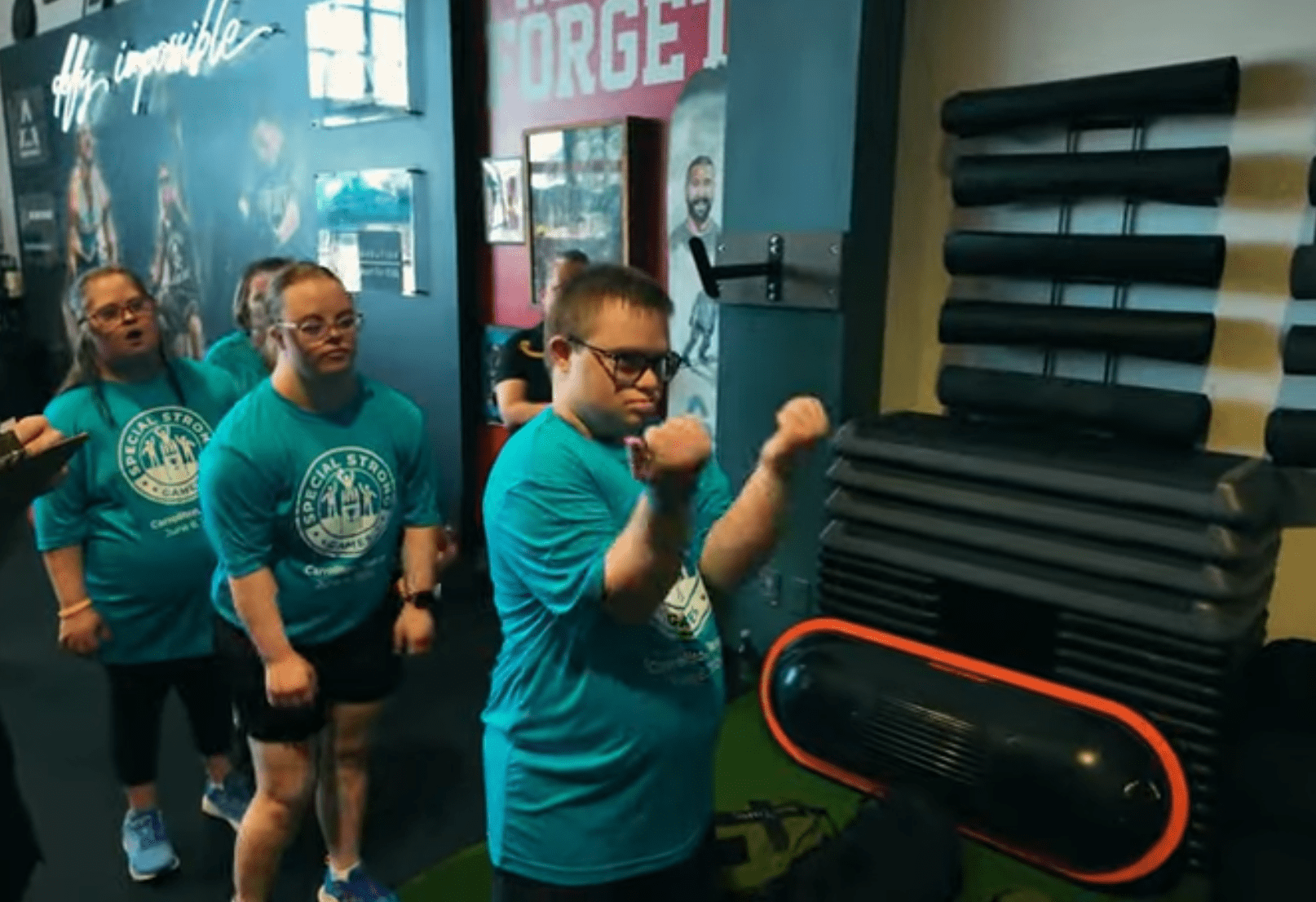
A healthy body can improve cognitive function and improve our overall physical well-being. This is true for every person, including those with special needs.
Unfortunately, many individuals with special needs are physically unhealthy. Sometimes it’s a condition that makes it difficult for them to move about easily or participate in physical activity. This can harm their overall health. And as they age their lifestyle tends to become even more sedentary.
Having an intellectual developmental disability shouldn’t prohibit our friends from being active and participating in fitness and wellness programs. In fact, we should be encouraging them to achieve an active lifestyle – within their capabilities – and develop healthy habits.
With an adaptive fitness approach like the one designed by Special Strong, our friends can benefit through tailored training programs that enhance their physical function and mobility, improving their quality of life.
“The Special Strong approach to fitness was developed for individuals with intellectual and physical disabilities,” says Reshae McDonald, Adaptive Fitness Coach and Owner of Special Strong Northeast Texas. “Our fitness programs help improve motor skills, muscle strength, coordination, flexibility, and balance, as well as their cognitive skills.”
She added, “Our goal is to help them live a more abundant life by helping them overcome barriers to being healthy and fit.”
McDonald’s son, Ty, is the reason she and her husband started a Special Strong program in Northeast Texas. Ty, born with Downs Syndrome, enjoys sports and fitness activities, but his participation has always been limited because of the lack of opportunities and accessibility for training.
“We know how it feels for Ty to be left out and not included because of his physical and cognitive condition. We want to deliver a fitness program that will strengthen those with special needs so that these individuals can be more active and have a healthier outcome,” explains McDonald.
McDonald’s team provides specialized trainers certified in working with individuals with mental, physical, and cognitive challenges. They tailor fitness exercises to a person’s individual capabilities. Someone with Cerebral Palsy that has spasticity in their hands and limbs will require different tools and assistance than a person with Down’s Syndrome who has good mobility but limited attention span and cognitive skills.
“We bring the workout to where they are. If they primarily use a wheelchair, we’ll tailor the workout so that it can be done in their chair and focus on core muscles to help them build full body strength so they can be more flexible and achieve greater range of motion,” says McDonald.
“While we are establishing a network of fitness facilities in Northeast Texas where we can hold training sessions, we can also bring the training to them in their home and even virtually,” she adds.
Special Strong of Northeast Texas works with people with special needs age eight and older individually and in small groups.
Sharon’s Place is excited that McDonald and a few of her trainers will be joining our friends at our recreation classes in July and August. We’ve invited Special Strong to these classes as an adjunct to the various fitness activities and games our friends already enjoy in our sessions. Ty, McDonald’s son will also help lead the training sessions with us as an assistant coach, further demonstrating how this type of program can boost our friends’ confidence and give them opportunities to serve and support others.